
The flame bowerbird, native to the forests of Papua New Guinea, is known for its striking colors and unique behaviors, making it one of nature’s most captivating avian species. Its appearance, a vibrant mix of fiery hues, immediately distinguishes it from other birds.
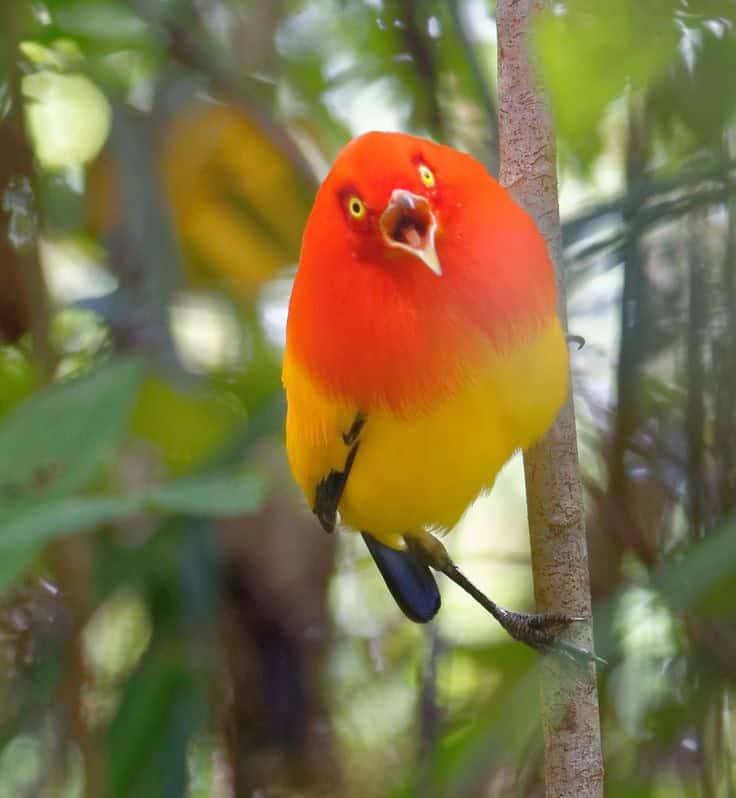
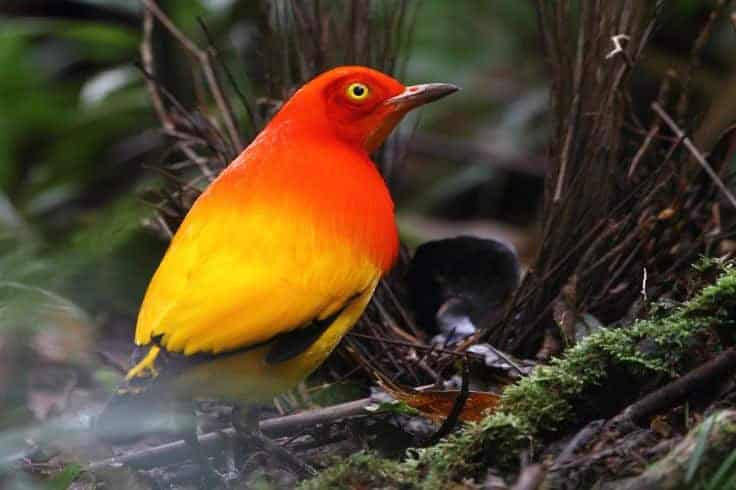
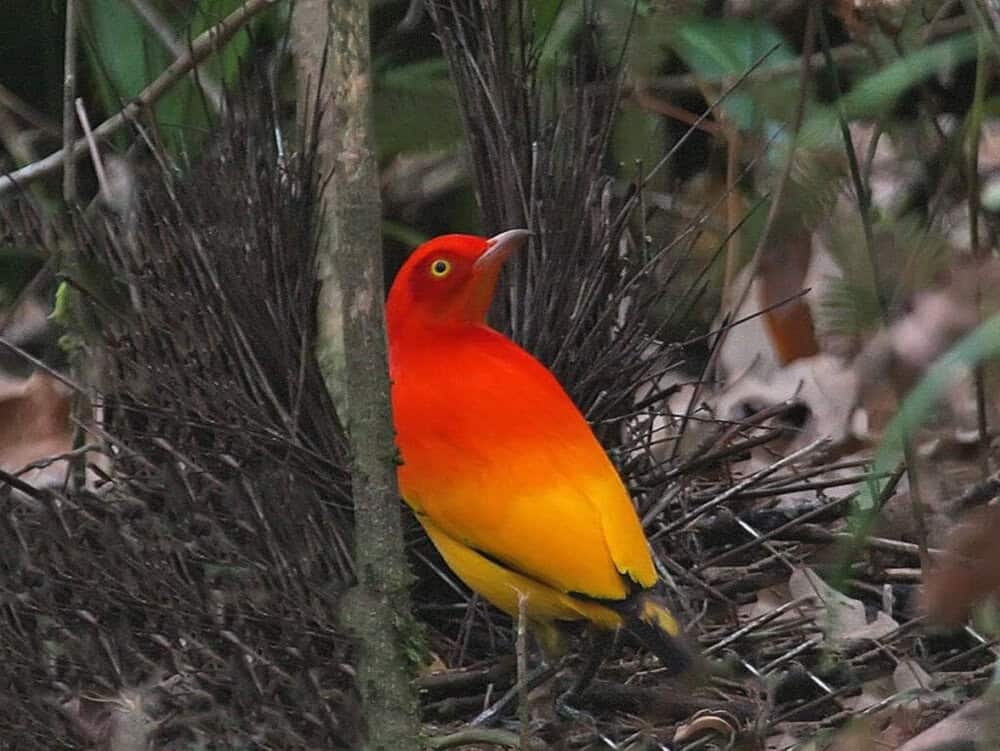
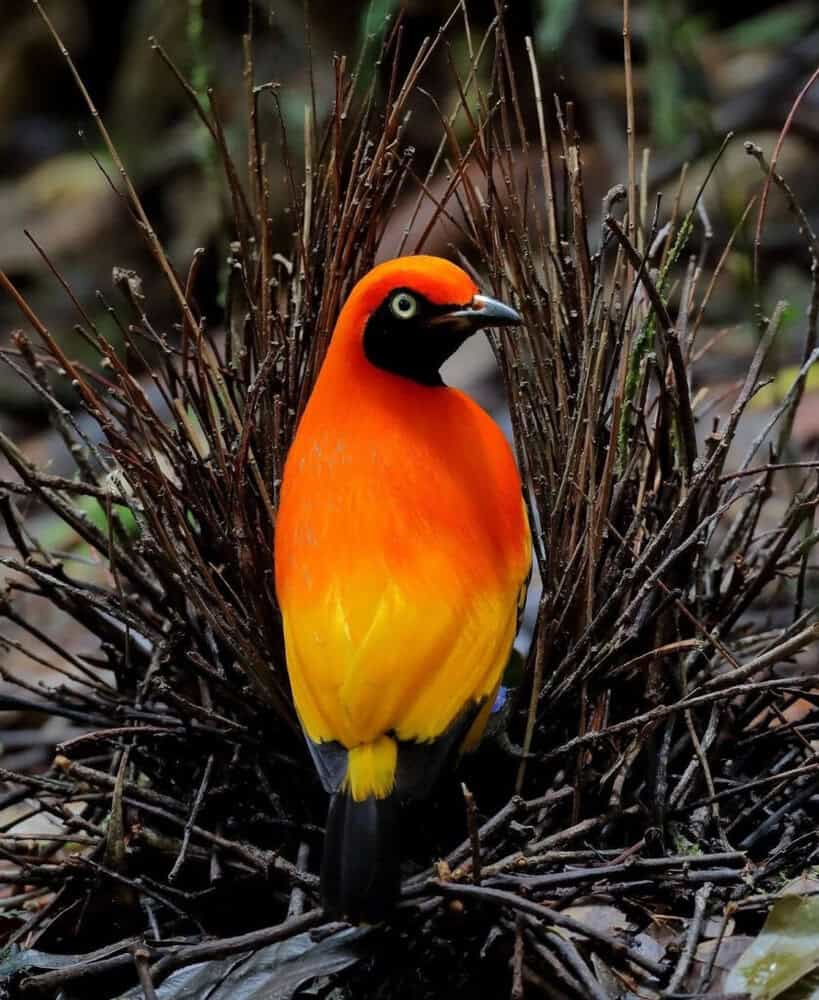
Named for its flame-like colors, the male flame bowerbird is a true spectacle. Its crimson-orange back blends into a brilliant yellow across its midsection, while dark wings and a yellow-tipped tail create a stunning contrast.
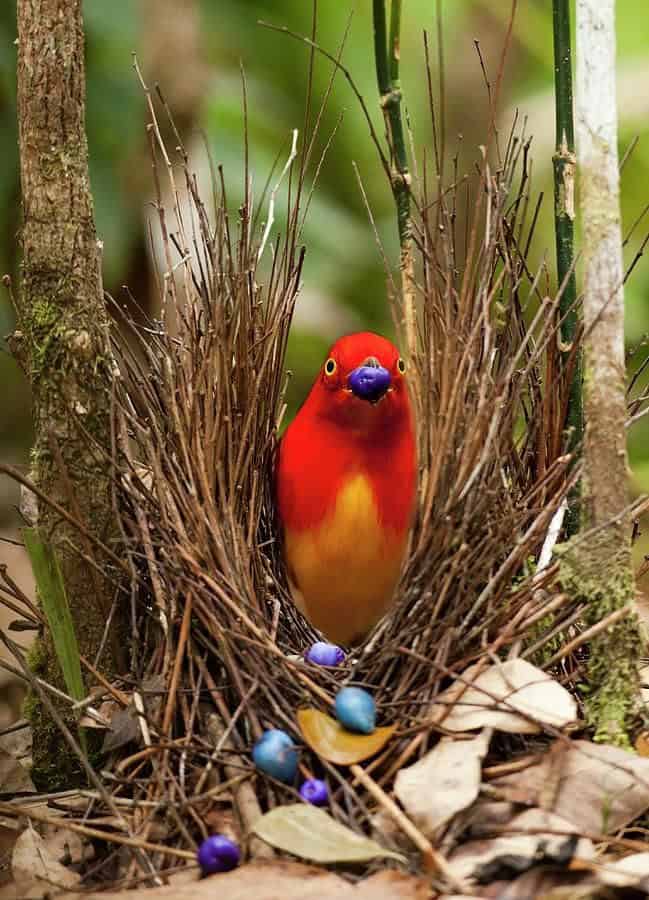
The eyes of the flame bowerbird can alternate between yellow and black—a mesmerizing feature that adds to its appeal. Interestingly, it can even control the color of each eye independently, enhancing its distinctive look.
In contrast, females are more subtly colored, with an olive-brown plumage accented by a touch of yellow at the midsection.
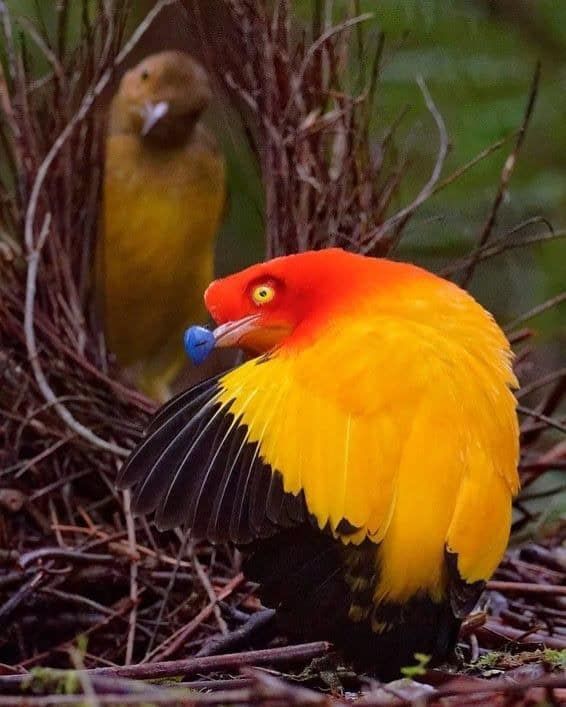
Historically significant, the flame bowerbird was one of the earliest bowerbirds studied by naturalists. Beyond its vibrant appearance, it is known for its mysterious nature, particularly when it comes to its diet, which primarily consists of insects and fruit.
During the breeding season, male flame bowerbirds go to impressive lengths to attract a mate. They build intricate bowers or courting arbors, which they decorate meticulously with collected objects.
Each male performs an elaborate courtship ritual, including a unique dance featuring tail and wing movements and quick head shakes—all within sight of the bower.
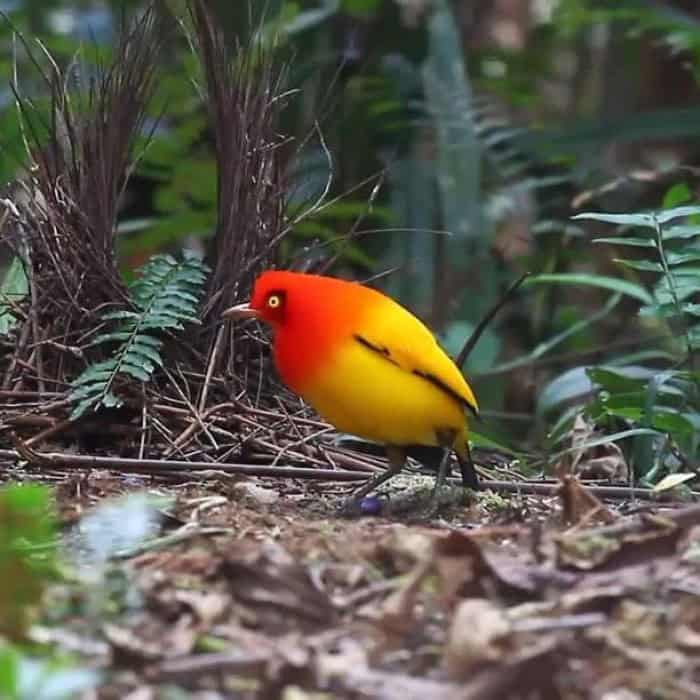
Females observe displays from multiple males, inspecting each bower before deciding on a partner. Once a mate is chosen, the female constructs a nest from soft leaves and plant tendrils, laying a single egg that incubates for around 19 to 24 days.
Flame bowerbirds inhabit a variety of environments, from rainforests to shrublands. The species is currently classified as “low concern” on the IUCN Red List, reflecting a stable population.
Observing the male flame bowerbird’s courtship dance, whether in person or on film, is truly awe-inspiring. This intricate and visually stunning display exemplifies the wonders of the natural world, encouraging us to appreciate and protect these extraordinary moments in nature.
Read More Birds