
The Olive-backed Sunbird (Cinnyris jugularis) is a small, eye-catching bird known for its striking appearance and a surprising hidden trait. Its plumage includes vibrant apricot-colored feathers, usually hidden beneath its wings, and a shiny blue throat, making this bird a standout in the avian world.
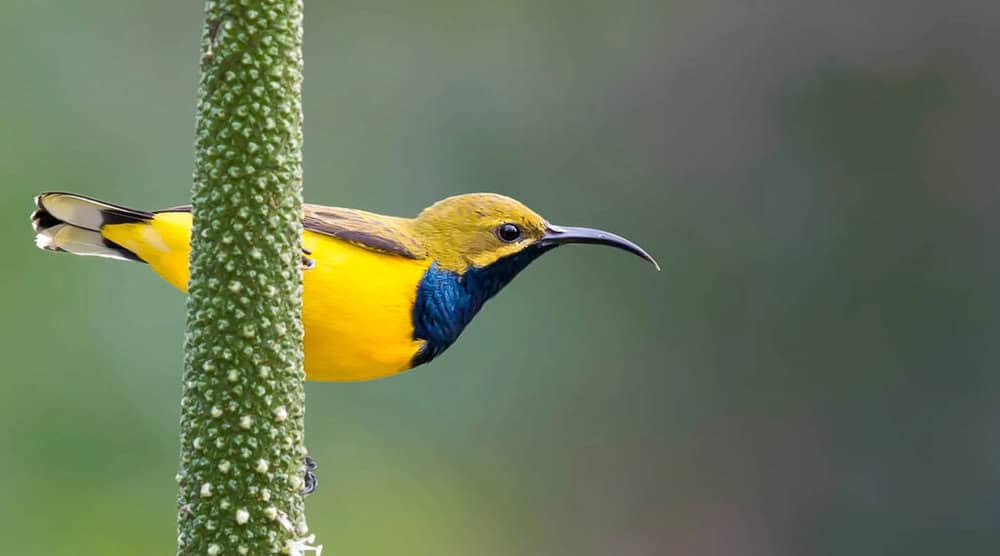
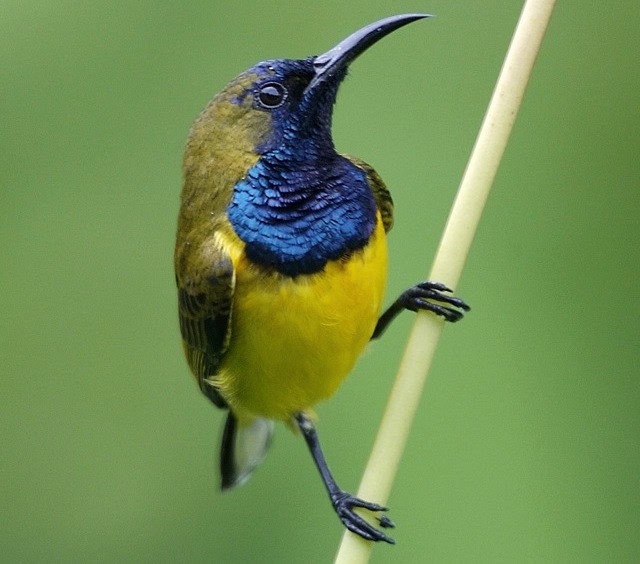
Male sunbirds are especially distinctive with their bright yellow bellies, dark brown backs, and glossy metallic blue covering their foreheads, throats, and upper breasts.
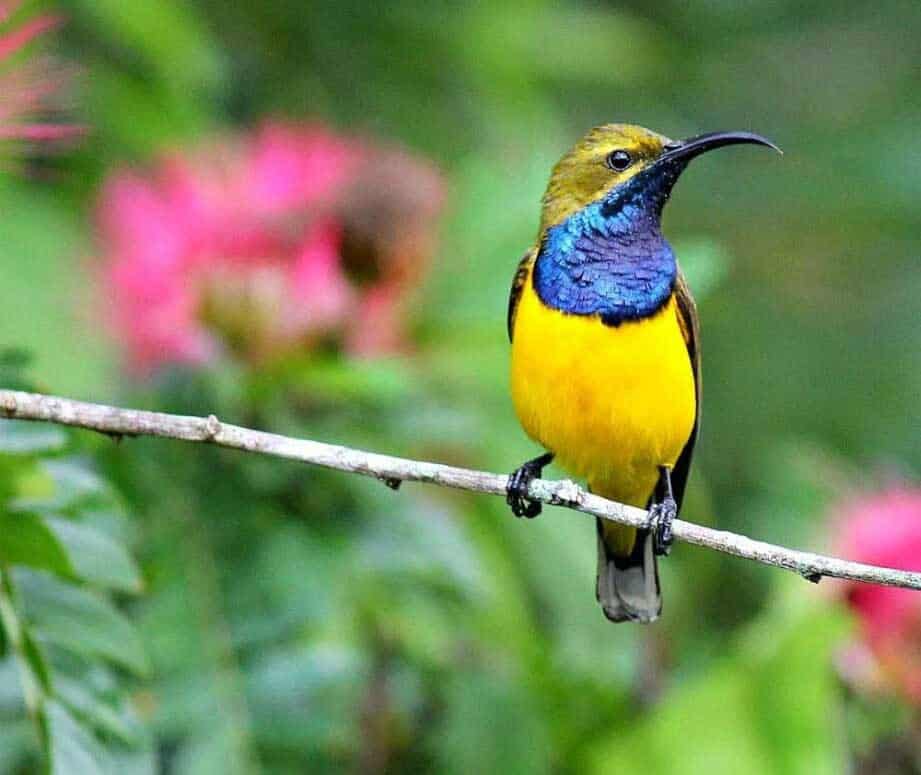
One of the most interesting aspects of the male Olive-backed Sunbird is its concealed apricot feathers, which are only revealed during display rituals, adding to its allure. The female, while also beautiful, has a simpler look with a yellow belly and brown back, lacking the more elaborate coloring of the male.
Native to Southeast Asia and Australia, these birds can be found from southern China to Indonesia and northeastern Australia. Though they originally lived in mangrove swamps, they have adapted to various human environments such as woodlands, orchards, plantations, and even towns and villages.
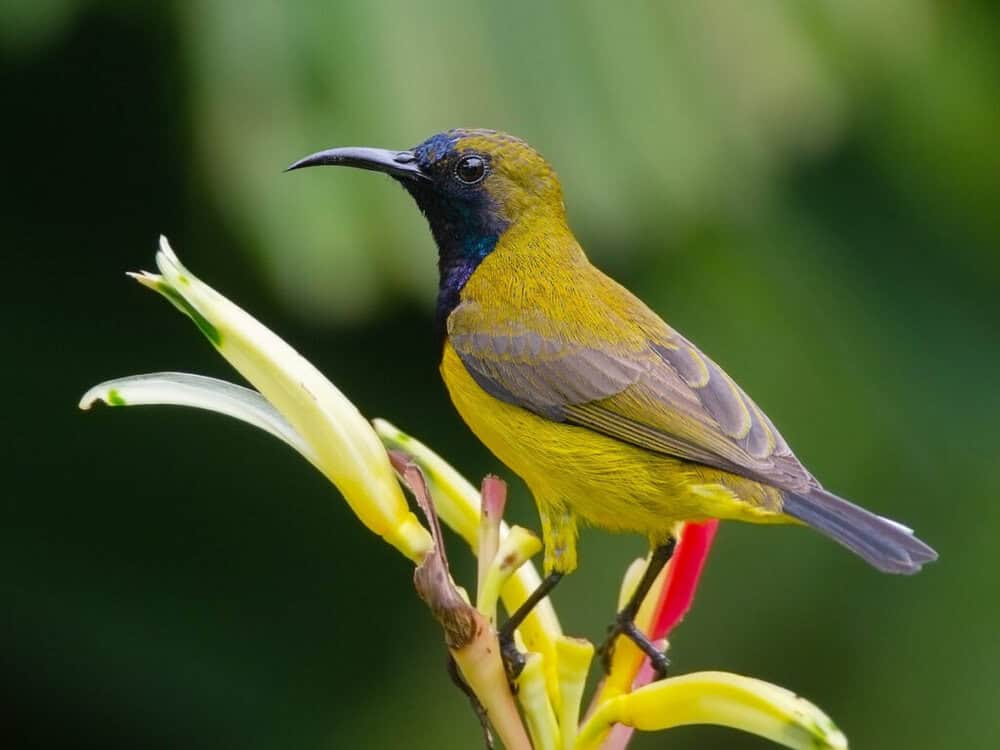
Olive-backed Sunbirds are omnivorous, feeding on both nectar and small invertebrates. They often collect nectar from flowering plants like coconut and papaya and hunt insects like spiders, ants, and caterpillars.
Their breeding season runs from December to July, during which the female builds a pear-shaped nest made of grass stems and fibrous materials. She lays 1-3 pale green eggs with brown spots and incubates them for about 11 days.
Once hatched, both parents share the responsibility of feeding the chicks until they are ready to leave the nest after 15-16 days.
Read More Birds