
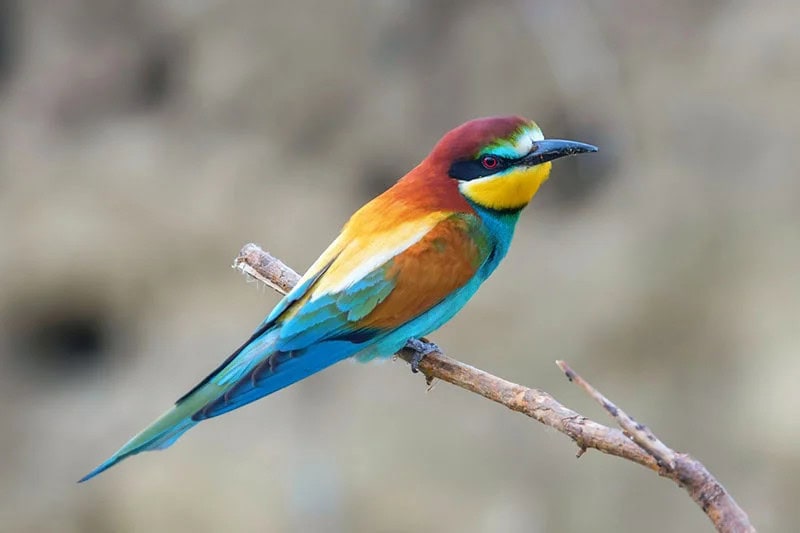
The European bee-eater is a stunning sight to behold. During the breeding season, male birds display a brilliant yellow throat, a rich red back, and a striking blue-green belly.
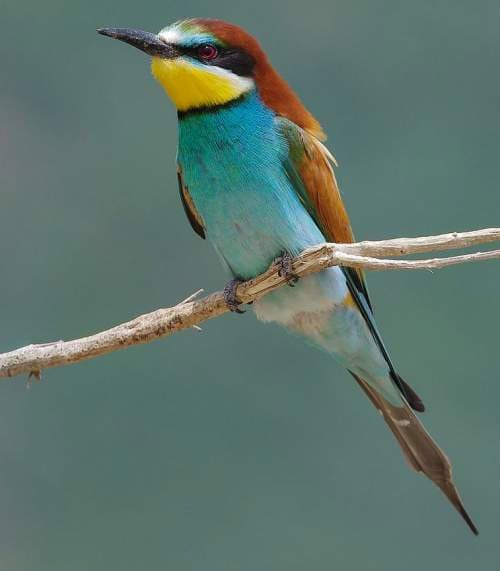
Their heads are capped with brown, accented by a yellow forehead, and marked with a distinctive black band stretching from the bill to the back of the neck. Beneath the bill, another bright yellow patch bordered by black stands out, while long tail feathers add elegance to flight.
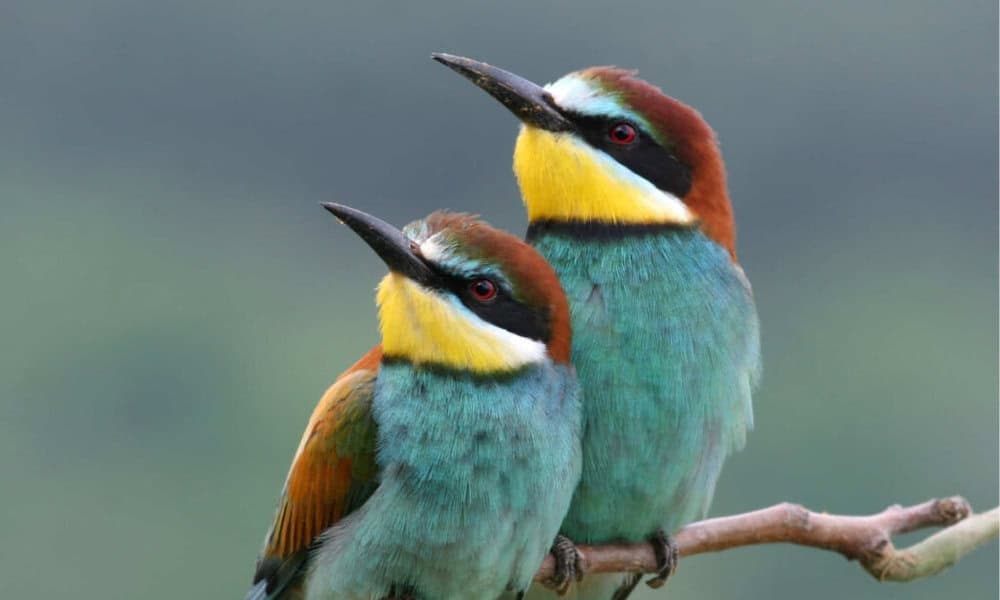
Females resemble males but have greener backs, scapulars, slightly paler throats, and breasts. Juveniles are duller in color, and their brown eyes will eventually transition to the vibrant red typical of adult bee-eaters.
These birds are found in diverse regions, from southern and central Europe to northern and southern Africa and parts of Asia. While some populations stay in South Africa year-round, many migrate to tropical Africa for the winter.
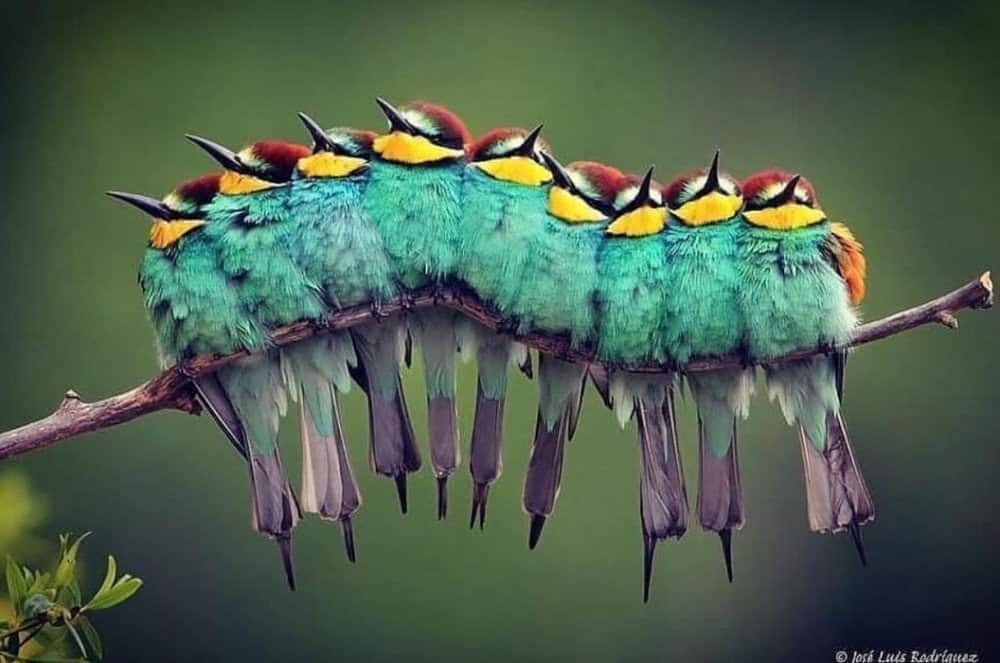
European bee-eaters thrive in areas near river valleys, farmlands, plains, and semi-deserts with shrubs. Known for their agile flight, they catch insects mid-air, feeding primarily on bees, wasps, locusts, and dragonflies.
During the breeding season, these bee-eaters form lifelong pairs and nest in sandy banks or cliff-side soil. Occasionally, older offspring help with the nest-building process. Females lay 4 to 6 eggs between April and July in the northern hemisphere, and from October to November in South Africa.
Both parents share incubation duties, with the female handling the nights. After about 20 days, the eggs hatch, and the young birds are ready to leave the nest within a month.
Although once seen as pests, European bee-eaters are listed as “Least Concern” on the IUCN Red List, thanks to stable populations and ongoing conservation efforts. Preserving their habitats remains important to ensure their continued survival.
The European bee-eater, with its vibrant colors and remarkable features, is truly a highlight of Europe’s birdlife. Its presence enriches the landscape, captivating both birdwatchers and nature lovers. As we admire this beautiful species, we must keep protecting their habitats for future generations.
Read More Birds