
In the vibrant ecosystems of South America, you might spot the Epaulet Oriole (Icterus cayanensis), a bird recognized for its distinctive shoulder patches resembling epaulets.
If you prefer not to read the full story,
Skip ahead to watch the video ->
This striking species inhabits several countries, including Brazil, Venezuela, Guyana, Bolivia, Colombia, Ecuador, Peru, French Guiana, and Suriname.
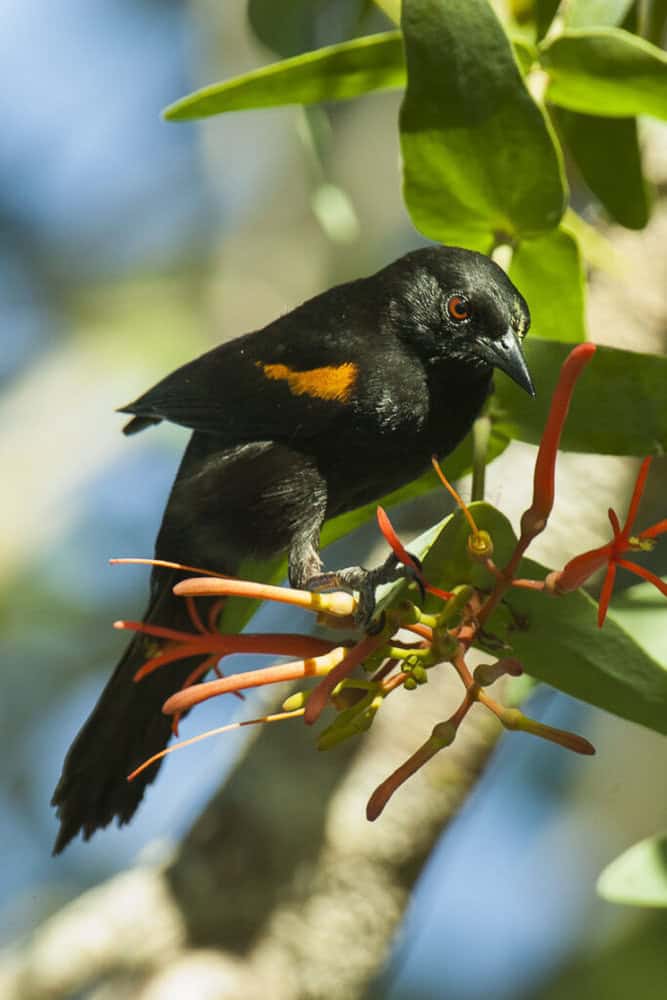
It thrives in various environments, from subtropical and tropical lowland forests and swamps to dry shrublands and areas of degraded forests.
Epaulet Orioles are known for their vocal abilities, producing a wide range of sounds, from harsh calls to melodious songs.
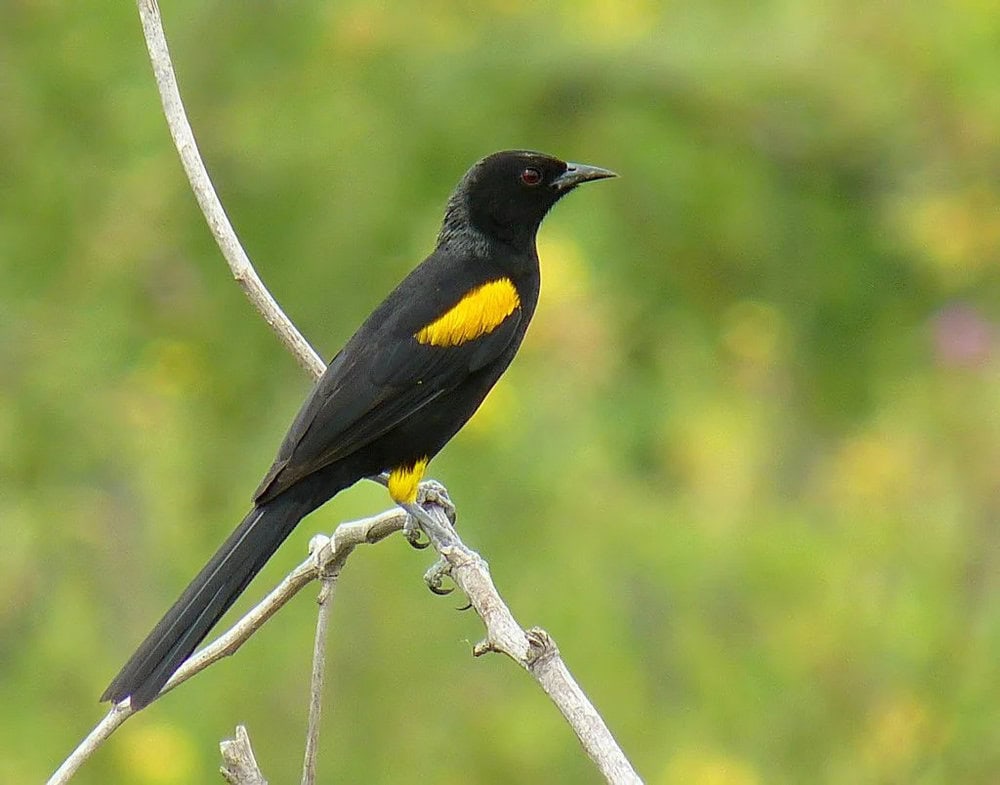
They also engage in an interesting behavior: mimicking the calls of raptors and other large birds, adding an extra layer of intrigue to their communication.
Typically, these orioles live solitary or in pairs, though they sometimes form small groups. Their nests are distinct, made from wide, dry twigs that form a shallow and fragile structure.
They usually raise one brood per year, though some may attempt more. After hatching, the young birds fledge within 10 to 20 days and reach sexual maturity by the end of their first year.

The Epaulet Oriole’s diet is varied, consisting of insects, fruits, and nectar, with foraging often in the middle or upper parts of trees. For those in captivity, a proper diet includes insect blends, softbill food, and fruit nectar to ensure they remain healthy.
With its eye-catching appearance and fascinating behavior, the Epaulet Oriole stands out in South America’s rich biodiversity. Watch for this beautiful bird on your next journey through the continent’s lush landscapes.
Read More Birds