
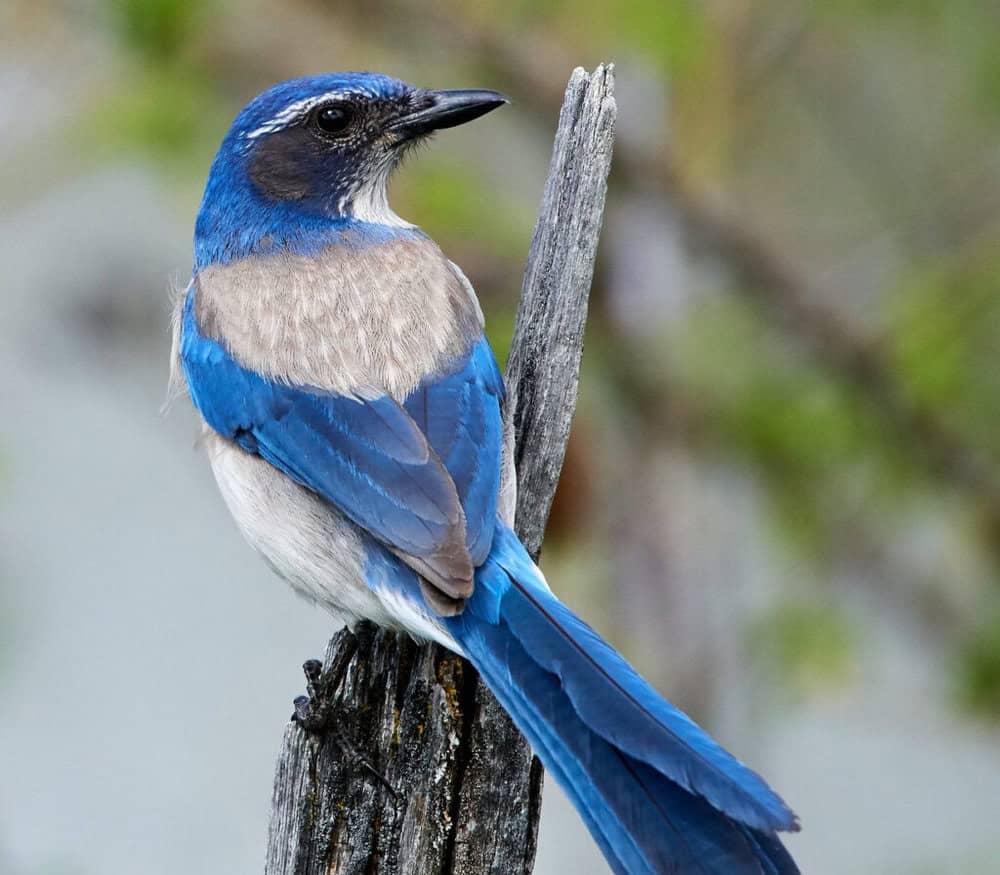
The California Scrub-Jay has been expanding its territory, reaching parts of Western Washington, a noteworthy shift for this species. Typically found along the coast, the bird is recognized by its striking appearance.
It has a deep blue body contrasted by a white belly and a gray back, with a clearly defined breast band. This feature distinguishes it from the Woodhouse’s Scrub-Jay, which has duller blue feathers, grayish underparts, and a less pronounced breast band.
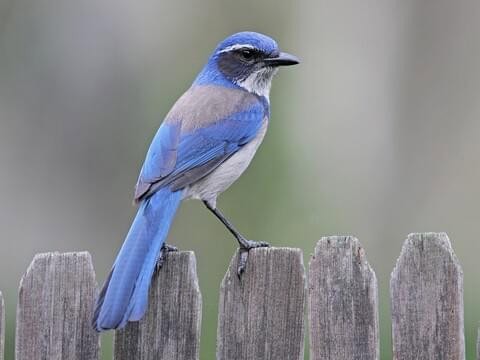
This range expansion highlights species’ adaptability as they adjust to new habitats. As part of the Aphelocoma genus, which includes the Florida Scrub-Jay, Island Scrub-Jay, and Mexican Jay, the California Scrub-Jay has an interesting name origin.
The genus name, Aphelocoma, comes from the Greek words “apheles,” meaning smooth, and “kome,” referring to hair. This name refers to these birds lacking crests, giving insight into how the species was named.
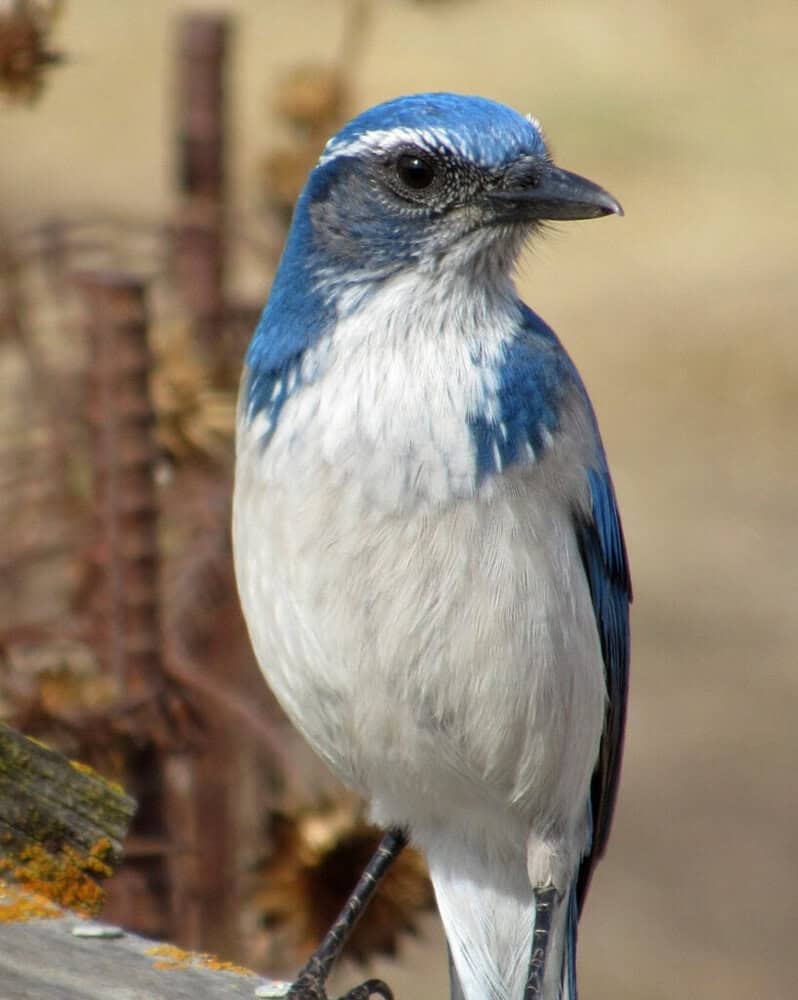
The diet of the California Scrub-Jay is omnivorous, covering a variety of foods like grasshoppers, beetles, bees, caterpillars, and acorns and seeds, especially in winter.
A distinctive behavior of these birds is scatter-hoarding, where they store surplus food for later use. Their caches might include acorns, animal parts, discarded human food like French fries, and even non-food items.
Interestingly, not all of their caches are retrieved, allowing some acorns and seeds to sprout, contributing to the regeneration of local plant life.
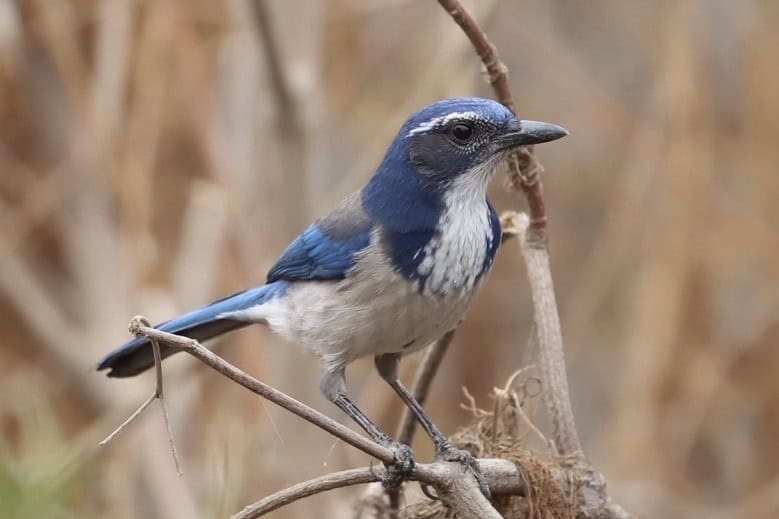
Territorial by nature, mated pairs of California Scrub-Jays defend their area year-round. They usually nest in oak trees, about 20 feet above the ground, with both sexes involved in building the nest.
The female incubates the 4-5 eggs, and after hatching, the young depend on their parents for food for up to two months. Juveniles stay with their parents during the fall and winter, forming flocks of up to 20 birds, often alongside non-breeding adults known as floaters.
Thankfully, populations of California Scrub-Jays remain stable, with no current need for conservation efforts. This stability shows that the species is thriving and self-sustaining in its environment.
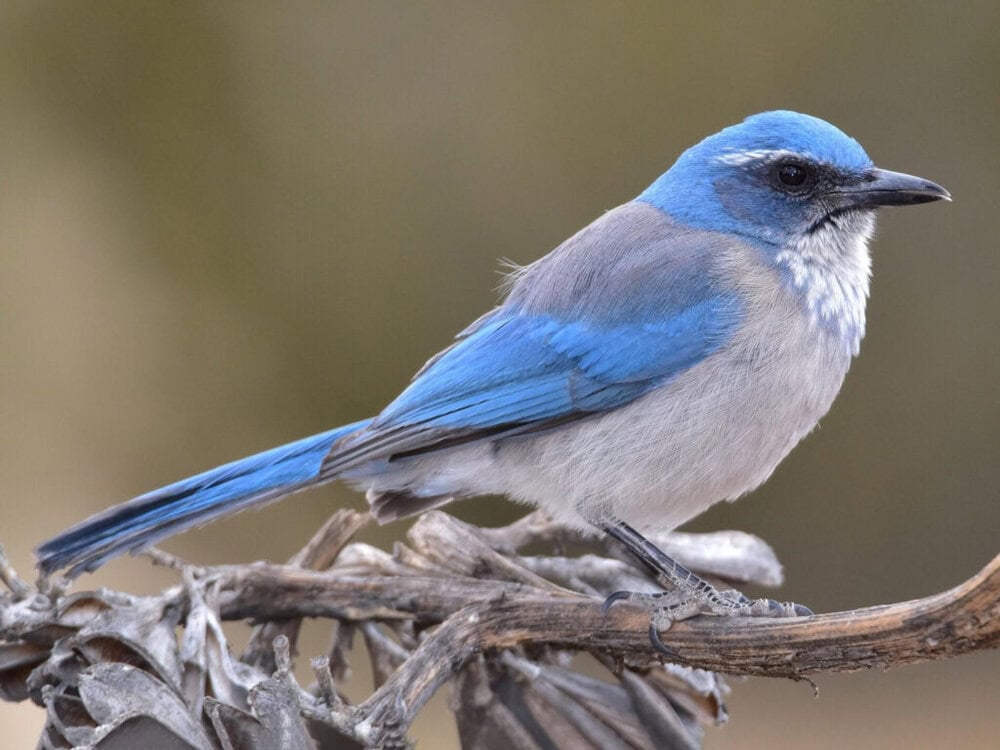
The California Scrub-Jay continues to captivate with its unique behaviors and adaptability, adding to the rich diversity of North America’s bird life. Learning more about these remarkable birds reminds us of the broader importance of protecting wildlife and maintaining healthy ecosystems for future generations.
Read More Birds