
In 1963, the Indian peafowl (Pavo cristatus) was named India’s national bird, celebrated for its vibrant blue plumage and striking presence.
This bird has long been a symbol of luxury, wisdom, beauty, and even pride—not only across India but worldwide. For many, spotting this captivating creature brings joy.
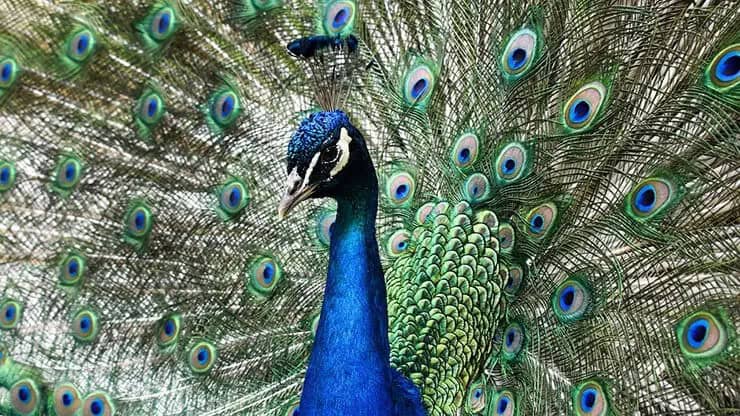
The Indian peafowl holds cultural significance throughout India, frequently appearing in folklore, mythology, and art. Native to India and Sri Lanka, this bird is now a familiar sight in parks and gardens around the world.
It’s particularly abundant south and east of the Indus River and, beyond legal protection under India’s Wildlife Protection Act of 1972, is revered by Indian society. Known for its extraordinary tail feathers, the male peafowl captivates audiences everywhere.
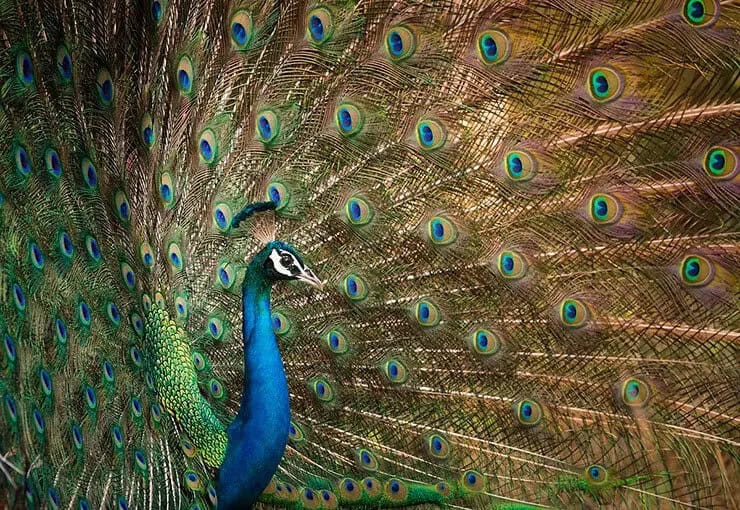
These multicolored feathers, often displayed in a magnificent fan, are admired for their beauty and grace, making the bird a cherished ornament in public gardens. The male uses this dazzling display to attract mates and as a defensive measure to appear larger and intimidate predators.
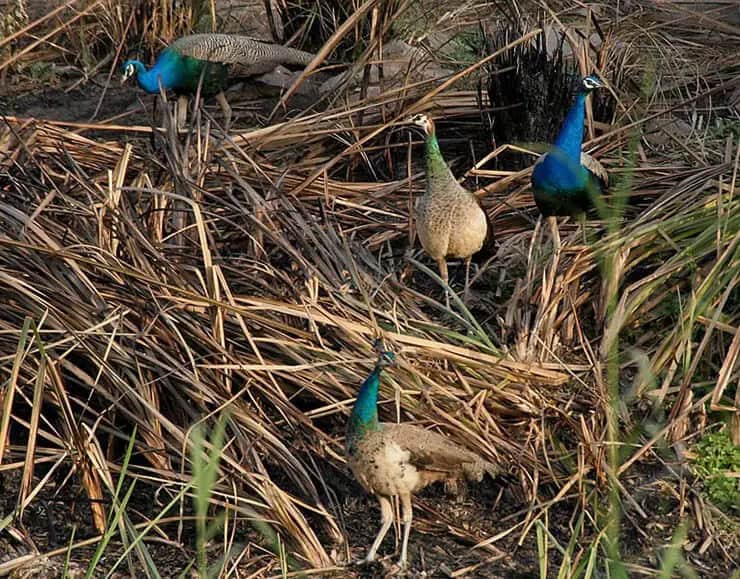
Unlike many birds, the Indian peafowl is non-migratory. Instead, it lives in small groups, with males typically accompanied by four or five females and their chicks. Although it’s primarily a ground-dweller, it roosts in high places at night to stay safe from predators.
While not known for flying, it can leap several meters off the ground and displays a strong, sometimes territorial personality, particularly around other animals.
Key Facts About the Indian Peafowl
- Scientific Name: Pavo cristatus
- Weight: 2.7–6 kg
- Wingspan: 1.4–1.6 m
- Lifespan: Up to 25 years
- Diet: Omnivorous, feeding on insects, lizards, frogs, snakes, and termites, as well as plant-based foods like flower petals and bamboo shoots
- Habitat: Originally from India and Sri Lanka, now found globally
- Threats: Habitat destruction, predation, electrocution from power lines, pesticides
Physical Appearance
Male Indian peafowls are comparable in size to swans, measuring up to 225 cm. They display an iridescent blue coloring on their head, neck, and chest, and a crest of short blue feathers.
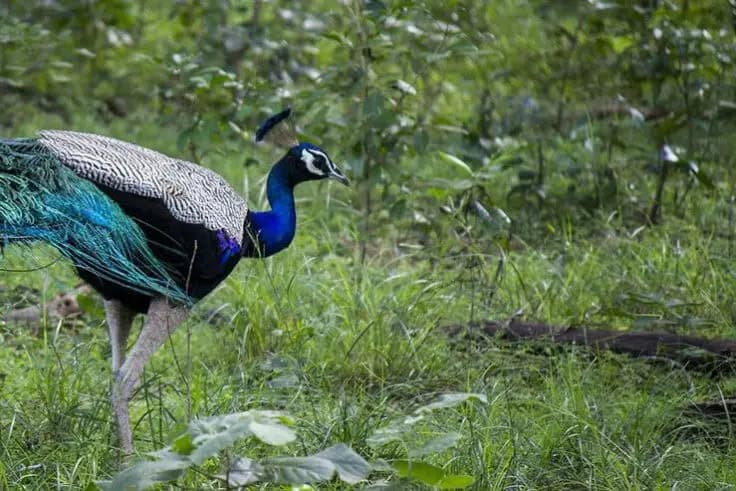
Their most iconic feature, however, is the colorful, eye-patterned tail that reaches full development around four years of age, creating an almost optical effect.
Females are more subdued in appearance, with brownish-grey coloring, a simple brown crest, and lighter weight than males, typically up to 3.5 kg.
Distribution and Habitat
Native to India and Sri Lanka, the Indian peafowl is found across southern Asia up to altitudes of 1,800 meters. Its preference for open woodlands with clearings, shrubs, and access to water has led to its spread as an ornamental species worldwide.
Diet
Indian peafowls enjoy a varied diet of fruits, seeds, and insects, occasionally preying on small snakes. Known as a “snake killer” in Sanskrit, this quality has added to its reverence within Indian culture.
Reproduction
The female Indian peafowl solely handles incubation and chick-rearing, laying 3-5 eggs per year. Males take about three years to develop their impressive tail, which continues growing over the years.
Peafowls generally live up to 25 years in the wild, joining in pairs only during the breeding season; otherwise, they tend to be solitary or travel in small groups.
Conservation
Listed as “Least Concern” by the IUCN in 2018, the Indian peafowl faces little risk of extinction. However, the species’ natural habitat continues to shrink due to human encroachment and water scarcity.
Efforts in India’s national parks and protected areas focus on conserving these environments to support wild populations. Known for its adaptability, the Indian peafowl is now raised globally, with many people keeping these birds as pets.
Read More Birds
