
In the fascinating world of birds, the White-browed Fulvetta (Fulvetta vinipectus) stands out with its unique appearance. Belonging to the Sylviidae family, this small bird is easily recognized by its rich brown feathers, dark facial mask, and bright white eyebrows.
If you prefer not to read the full story,
Skip ahead to watch the video ->
Male and female White-browed Fulvettas share similar color patterns. Juvenile birds tend to be rustier on their upper parts and have less defined crown stripes. Their flanks also appear paler compared to the adults.
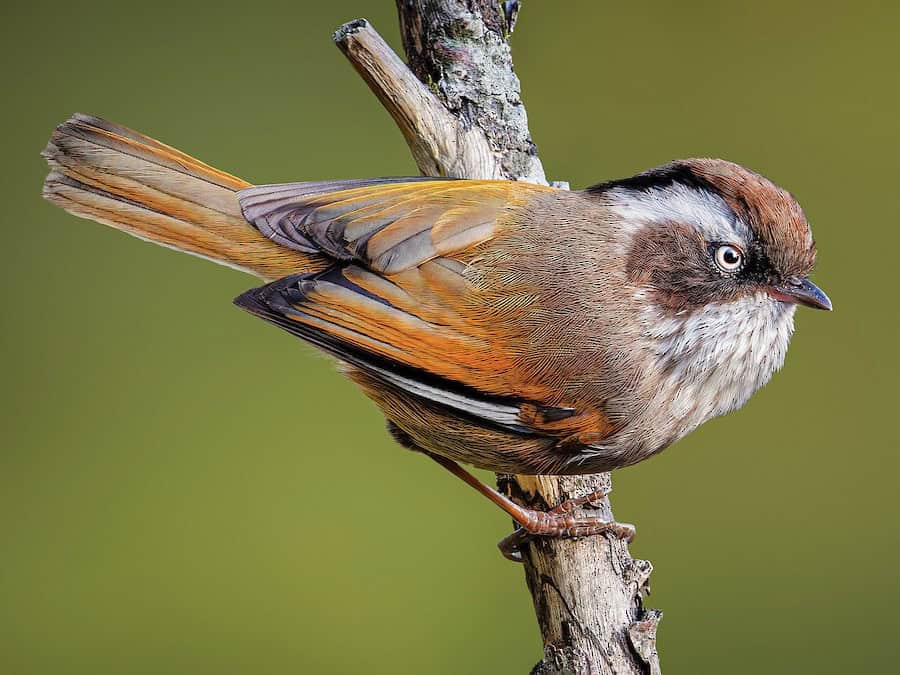
These birds are native to the Indian subcontinent and Southeast Asia, with populations found at elevations above 2300 meters in the Himalayas (2000 meters in China). They are commonly seen in Bhutan, India, Myanmar, Nepal, and Vietnam, where they thrive in temperate forests.
The diet of the White-browed Fulvetta varies by season. During the breeding period, they primarily feed on insects, especially caterpillars. In other seasons, they also consume berries and small seeds.
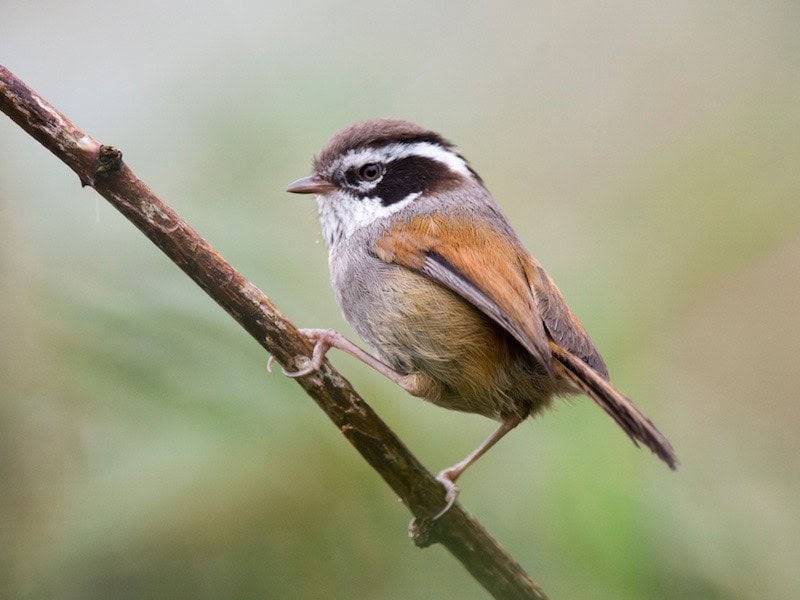
Their breeding season stretches from April to July in the Himalayas and May to June in China. The female builds a deep, cup-shaped nest using dry grass, bamboo leaves, moss, fibers, and bark.
These nests are typically found in bushes or bamboo, about 0.9 to 2 meters above the ground. She lays 2 to 3 eggs and incubates them until they hatch.
Currently, the White-browed Fulvetta is classified as Least Concern on the IUCN Red List, meaning its population is stable and there are no immediate threats to its survival.
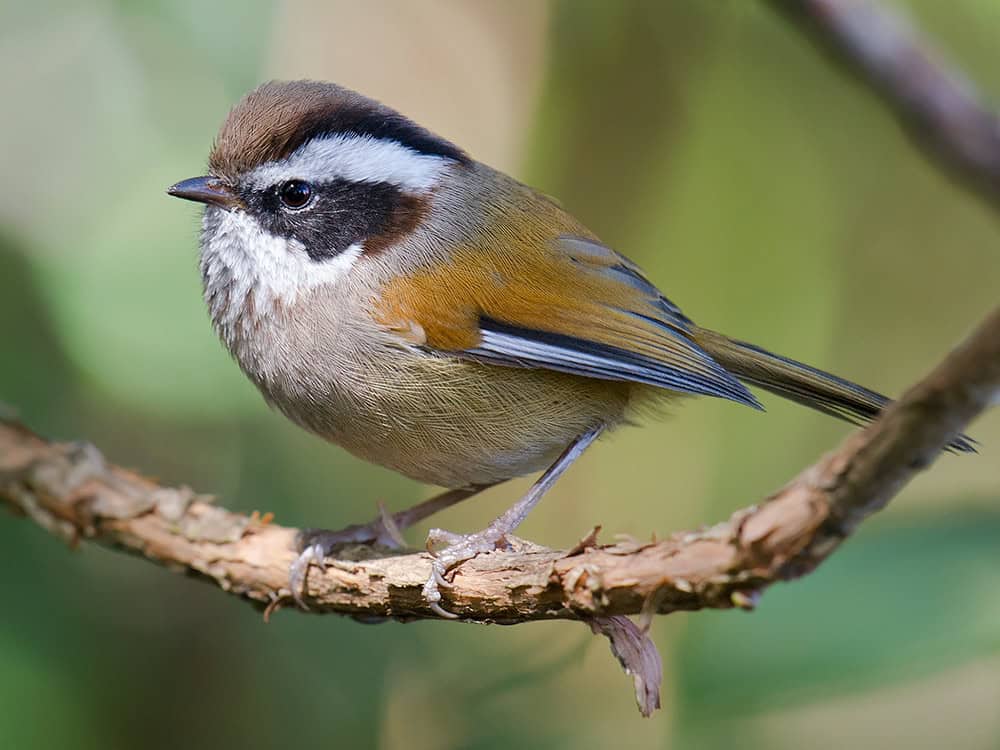
The White-browed Fulvetta’s striking appearance, with its orange-tinted wings and bright white eyebrows, makes it a remarkable member of the bird kingdom. Preserving their habitats ensures that future generations can continue to admire this beautiful species.
Read More Birds
