
The world of hummingbirds is known for showcasing some of nature’s most beautiful creations, and among these dazzling species, the Snowcap hummingbird truly stands out. Its remarkable appearance, combined with its tiny size, makes it a striking sight in the wild.
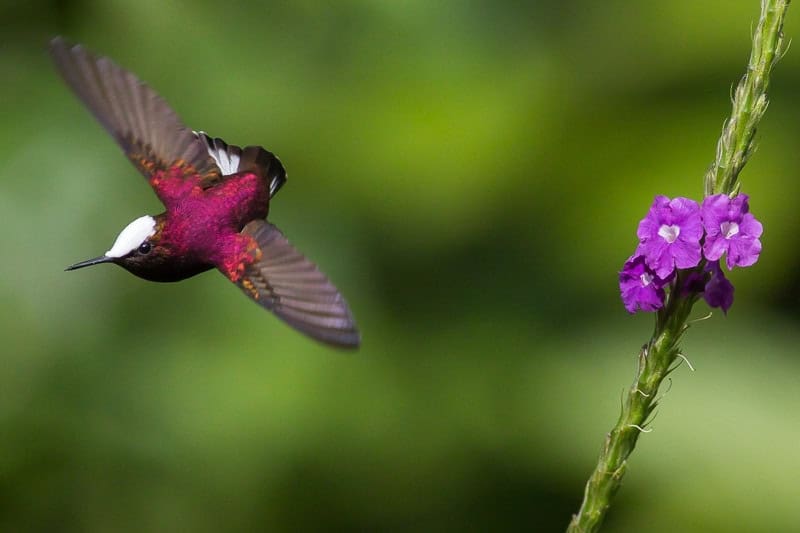
Despite being no larger than a bumblebee, the Snowcap’s vibrant red wine and deep purple feathers, highlighted by a brilliant white cap, give it an unforgettable look. This blend of colors makes it one of the most unique hummingbirds in existence.
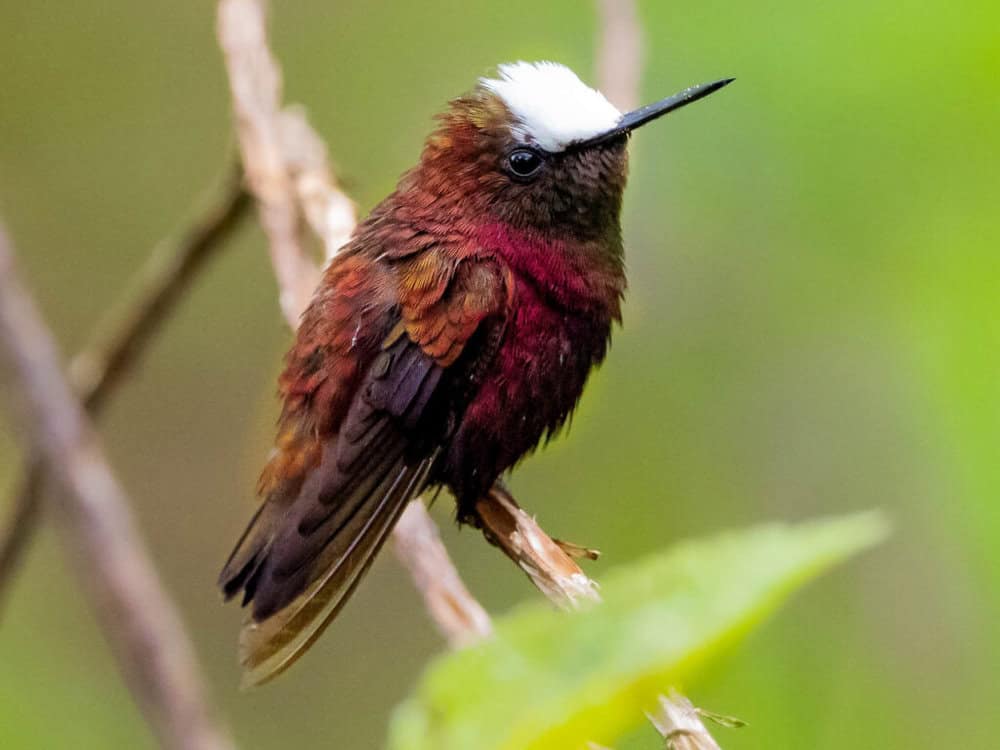
While it can be challenging to distinguish male from female Snowcaps, there are subtle differences. Females have snowy white undersides, bronze-green upperparts, and a straight, short bill. Even young birds share some of these characteristics, contributing to their distinct appearance.
Snowcap hummingbirds are native to the rich forests of Costa Rica, Nicaragua, and western Panama. They are commonly found in forest canopies and near the edges of these ecosystems, where they can thrive in their natural habitat.
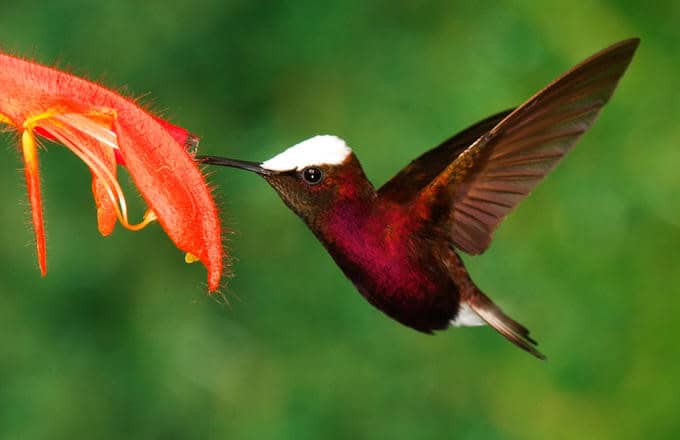
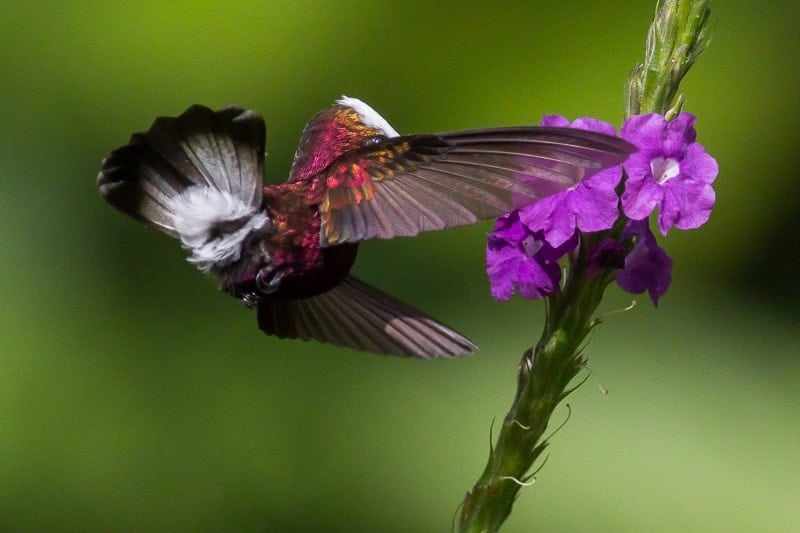
Their diet primarily consists of nectar, which they extract from small flowers on vines, trees, and epiphytes. Using their long tongues, they can hover and sip nectar at an impressive rate, up to 13 times per second.
In addition to nectar, they also feed on insects and spiders, showcasing a varied diet. During the breeding season, both male and female Snowcaps mate with multiple partners. Females are responsible for building small, cup-shaped nests from plant fibers and cobwebs.
They lay two eggs and incubate them for about two weeks. After hatching, the females care for the chicks until they are ready to leave the nest.
The Snowcap hummingbird is a stunning example of nature’s craftsmanship. Its beauty and charm continue to captivate anyone lucky enough to witness it. Sharing its story is a great way to celebrate this wonderful species with others.
Read More Birds
